

Does smoking fentanyl cause withdrawal?
Yes. Smoking fentanyl produces the same physical dependence as injecting it, so stopping brings the same opioid withdrawal: aches, sweating, nausea, diarrhea, anxiety and sleeplessness. Smoking reduces some injection harms, such as abscesses, but not overdose risk. Medically supervised detox, often with buprenorphine or methadone, is the safest way to stop.
Why are more people in Los Angeles smoking fentanyl?
Because the supply changed, and people changed with it. On November 2, LAist reported that Los Angeles County stopped handing out syringes and pipes at the Skid Row Care Campus in August, a pause the county calls temporary. The same reporting noted something families outside Skid Row should hear: people in Los Angeles who use fentanyl have been moving from injecting it to smoking it.
The research behind that observation is local. A team led by USC’s Ricky Bluthenthal surveyed 472 people who inject drugs in Los Angeles and Denver between 2021 and 2022 and published the results in 2025. Over roughly eighteen months, daily injection fell from 78 to 56 percent, daily heroin use fell from 46 to 28 percent, and daily fentanyl smoking rose from 18 to 33 percent. Self-reported skin abscesses dropped as injection declined.
Nationally the picture is the same. The CDC found that from early 2020 to late 2022 the share of overdose deaths with evidence of smoking rose from 13.3 to 23.1 percent, while the share with evidence of injection fell from 22.7 to 16.1 percent. By 2022, smoking was the route most often documented in overdose deaths.
Is smoking fentanyl safer than injecting it?
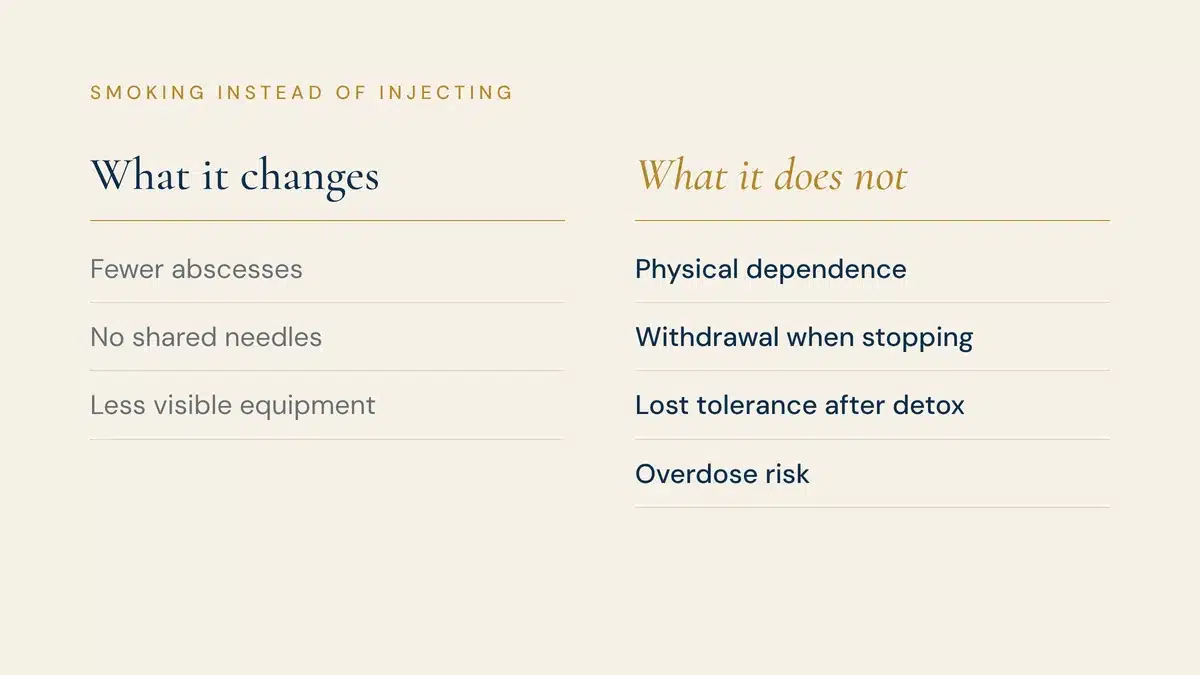
Safer in some ways, and not in the way that matters most. Smoking removes the needle, so it lowers the risk of abscesses and of infections spread by shared equipment. The CDC lists fewer abscesses, lower cost, less stigma and a sense of more control over each dose among the reasons people switch. It also notes a perception of lower overdose risk, and that is where the comfort ends.
Smoked fentanyl is absorbed quickly, and the CDC report concludes that smoking still carries substantial overdose risk. In the western states it tracked, the share of overdose deaths with evidence of smoking reached 42.4 percent by the second half of 2022, the highest of any region. People who smoke but never inject may also never walk into a syringe program, which is where much of the overdose education and naloxone in a city like Los Angeles has been handed out.
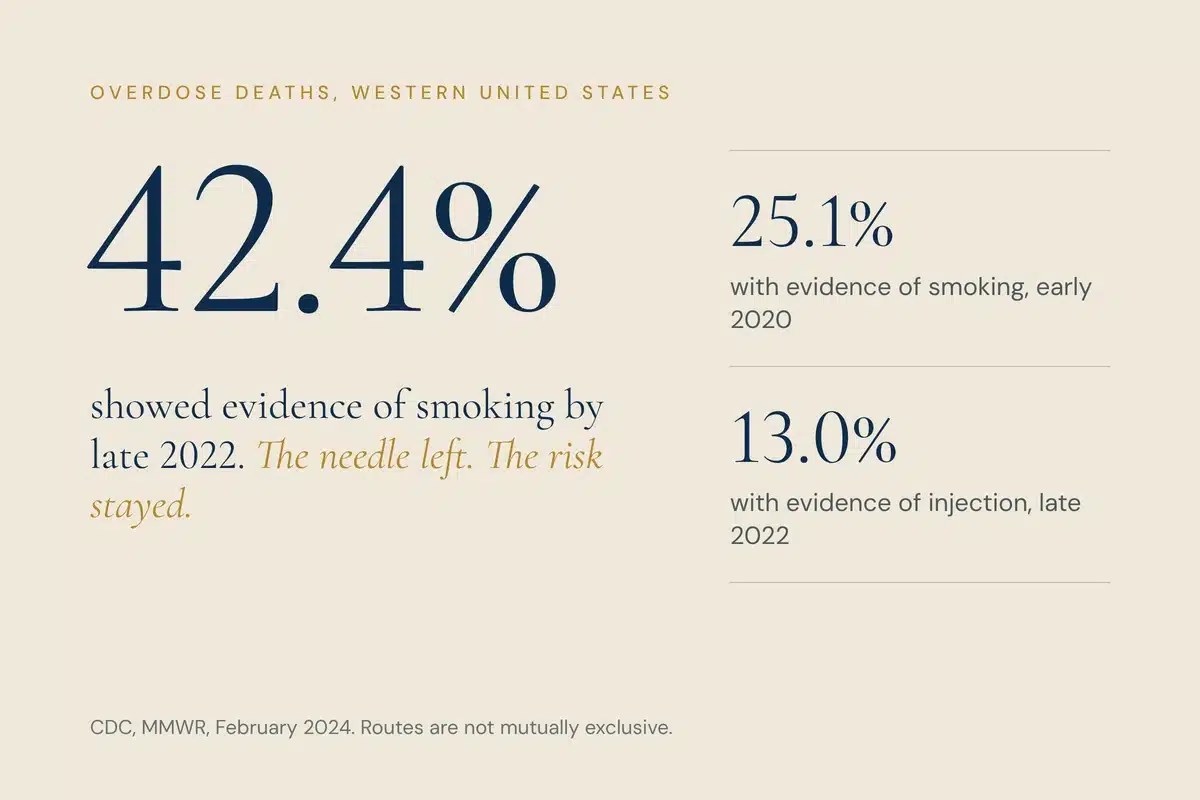
For a family, the practical point is simple. A loved one who has switched from needles to a pipe has not stepped down to a milder habit. The drug, the dependence and the overdose risk are the same.
What does fentanyl withdrawal feel like when someone smokes it?
It feels like any opioid withdrawal, because it is one. MedlinePlus lists the early symptoms as agitation, anxiety, muscle aches, tearing, insomnia, a runny nose, sweating and yawning. Later come abdominal cramps, diarrhea, dilated pupils, goosebumps, nausea and vomiting. The symptoms are very uncomfortable but usually not life threatening, though vomiting and diarrhea can lead to dehydration and to dangerous shifts in body chemistry.
What people describe to us is less a list of symptoms than a feeling of being trapped inside them. Sleep disappears. Restlessness makes it hard to sit through a meal or a conversation. And the mind keeps returning to the one thing that would make all of it stop in minutes. That pull is the reason so many attempts to quit at home end on the second or third day.
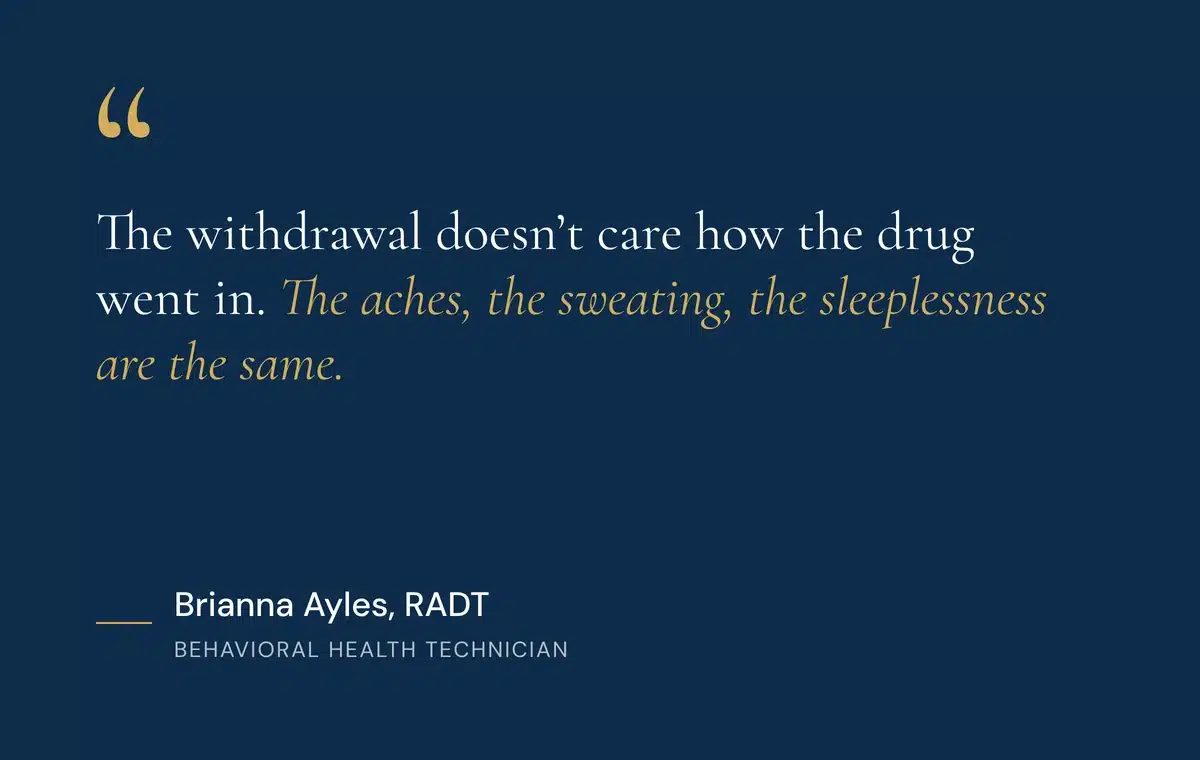
“Families often tell us it can’t be that bad because he only smokes it. The withdrawal doesn’t care how the drug went in. The aches, the sweating and the sleeplessness are the same, and so is the pull to make them stop.”
Brianna Ayles, RADT, Behavioral Health Technician, My Limitless Journeys
Why is the week after withdrawal the riskiest time?
Because tolerance falls faster than habit does. MedlinePlus is blunt about it: most opioid overdose deaths occur in people who have just detoxed, because withdrawal lowers tolerance and a much smaller dose than the person used to take can now be fatal. A person who stops on their own, feels better after a week and then uses “just once” at the old amount is in exactly that position.
That is why the plan for the days after detox matters as much as detox itself, and why naloxone belongs in every home where opioids have been part of life. SAMHSA’s Overdose Prevention and Response Toolkit walks families through recognizing an overdose and giving naloxone, and it applies whether the fentanyl was smoked, swallowed or injected. Los Angeles County’s Substance Abuse Service Helpline, 800-854-7771, is another place to start, according to the county’s June overdose report, which also recorded 2,298 overdose and poisoning deaths in 2025.
“The most dangerous stretch is not withdrawal itself. It is the week after, when tolerance has dropped and the person still remembers their old amount. That is why detox should lead straight into treatment and a plan, never to an empty calendar.”
Maria Dahlman, MA, LCSW, Regional Clinical Director, Emend Healthcare
What happens in medically supervised fentanyl detox?
Supervised detox replaces endurance with medicine and monitoring. According to MedlinePlus, buprenorphine treats opioid withdrawal and can shorten detox, methadone relieves withdrawal and can continue as long-term treatment, and clonidine eases the anxiety, sweating, aches and cramping without touching craving. Other medications settle the stomach and help with sleep. Most people, MedlinePlus adds, need longer-term treatment after detox, and anyone detoxing from opioids should be checked for depression and other mental health conditions.
Timing is the delicate part with fentanyl. Starting buprenorphine too early can bring on withdrawal suddenly, so clinicians watch symptoms closely and adjust day by day. Our guide to opioid and fentanyl detox explains that timing in more detail, and our plain-language guide to detox medications describes what each medication does and does not do.
For families comparing options, medically supervised detox for Los Angeles residents at My Limitless Journeys takes place in a private bedroom at our six-bed residence in Encino, about twenty minutes over the hill from the Westside, Hollywood and Downtown. Psychiatric oversight adjusts the plan daily, and when withdrawal is complete, care continues in the same house through our detox and residential program, with no transfer to a second facility.
“In detox we check on people around the clock, because the second and third days are when the urge to leave is strongest. Having someone in the room through those hours matters more than any amenity.”
Brianna Ayles, RADT, Behavioral Health Technician, My Limitless Journeys
How can a family start the conversation about detox?
Start with what you have seen, not what you have read. Name the specific changes, the missed mornings, the money, the weight, and say that you are worried. Ask whether they have tried to stop and what happened. Many people who smoke fentanyl have already tried, alone, and quit on day two because the withdrawal was unbearable. Hearing that withdrawal can be treated, not simply endured, is often what opens the door.
Have the next step ready before the conversation. That might be a call to a detox program, a confidential insurance check that commits no one to anything, or simply a time to talk again. Our guide for families whose loved one refuses treatment covers what to do when the first answer is no. If your family is in the city, our page on fentanyl detox for Los Angeles families explains how admission works, and the Los Angeles location overview shows the full continuum available from the Encino residence.
Frequently asked questions
Is smoking fentanyl less addictive than injecting it?
No. The route changes how fast the drug reaches the brain and which injuries are likely, but smoked fentanyl still produces tolerance and physical dependence. People who smoke it daily experience the same opioid withdrawal when they stop, and the same need for treatment that addresses craving, not only the first week.
How long does fentanyl withdrawal last?
It varies with the amount, the length of use and the person. The most intense symptoms usually last several days, and in our experience most medically supervised detoxes run from several days to about two weeks. Sleep problems, low mood and craving can continue longer, which is why treatment continues after detox.
Can someone detox from smoked fentanyl at home?
It is possible but difficult, and MedlinePlus advises that home withdrawal be done very slowly, with medicines and strong support. The greater risk comes afterward: tolerance drops quickly, and using the old amount can cause a fatal overdose. Supervised detox with a plan for what follows is the safer choice.
Does naloxone work if fentanyl was smoked?
Yes. Naloxone reverses opioid overdose regardless of whether the drug was smoked, swallowed or injected. Call 911, give naloxone and stay with the person. More than one dose may be needed with potent synthetic opioids, so keep at least two doses where they can be found quickly.
If someone you love smokes fentanyl and has tried to stop on their own, talk with us about supervised detox, what the first week involves and what comes after it.
This article is general information, not a diagnosis or a substitute for an assessment by a clinician. If someone is in immediate danger, call 911. In a mental health or substance use crisis, call or text 988.
Sources
- Schrank, A. “LA County pauses syringe and pipe handouts at Skid Row services hub.” LAist, November 2, 2026. laist.com
- Ganesh SS, Smeltzer RP, Goldshear JL, Shah P, Corsi K, Huh J, Bluthenthal RN. “Heroin injection to fentanyl smoking: Examining temporal trends in substance type and route of administration among people who inject drugs in Los Angeles, CA and Denver, CO, USA between 2021 and 2022.” International Journal of Drug Policy, 2025;143:104864. pubmed.ncbi.nlm.nih.gov
- Tanz LJ, Gladden RM, Dinwiddie AT, et al. “Routes of Drug Use Among Drug Overdose Deaths, United States, 2020 to 2022.” Morbidity and Mortality Weekly Report, 2024;73:124 to 130. Centers for Disease Control and Prevention. cdc.gov
- MedlinePlus Medical Encyclopedia, “Opiate and opioid withdrawal,” U.S. National Library of Medicine, reviewed May 15, 2026. medlineplus.gov
- SAMHSA, Overdose Prevention and Response Toolkit (PEP23-03-00-001), updated July 2025. library.samhsa.gov
- County of Los Angeles, “Drug-Related Overdose Deaths in LA County Continue to Fall,” June 25, 2026. lacounty.gov
Every article on this site is written by our editorial team and reviewed by a licensed clinician. Read how we write and review content.
Keep reading: Fentanyl detox for Los Angeles families · Opioid and fentanyl detox · Cychlorphine in Los Angeles · Fentanyl addiction: warning signs and risks